
What a Potential Ban on Institutional Buyers Could Mean for Texas Hill Country Investors
A potential ban on institutional buyers sounds simple—but the ripple effects could be anything but. From small investors to first-time buyers, the real impact depends on how “large investor” is defined and how local markets respond. Here’s my take on what this could mean specifically for the Texas Hill Country.
MARKET INSIGHTS
Chris Parreira - Real Estate & Mortgage Advisor
1/15/20263 min read
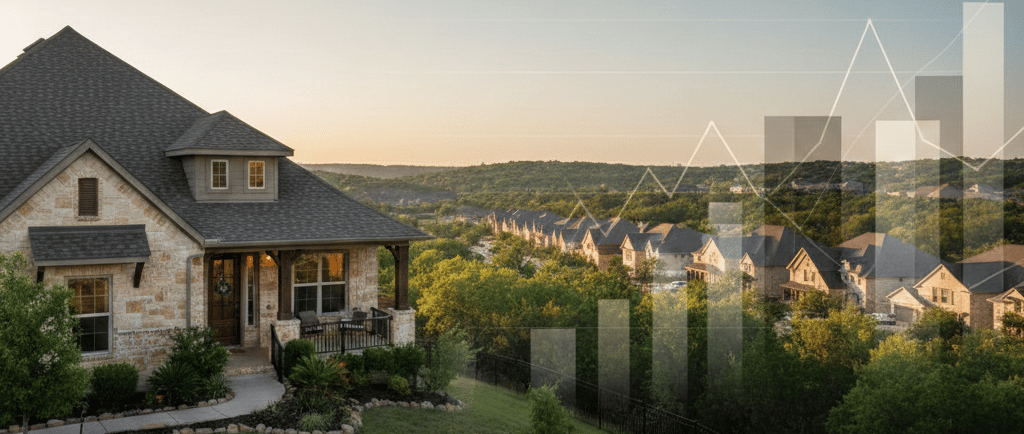

Recent headlines have reignited a national debate around housing affordability after President Donald Trump announced plans to ban large institutional investors from purchasing single-family homes. While the proposal is still light on specifics, the implications (especially for local markets like the Texas Hill Country) deserve careful analysis rather than emotional reactions.
As an investor focused REALTOR® and Mortgage Advisor serving New Braunfels, Comal County, Guadalupe County, and the greater Hill Country, I want to break down what this could actually mean for homeowners, small investors, and future buyers in our area.
Why Institutional Buyers Are Under Scrutiny
The core argument behind the proposal is simple:
Homes are for people, not corporations.
Large Wall Street-backed firms purchasing single-family homes have been blamed for:
Increasing competition for first-time buyers
Driving up prices in certain metro areas
Aggressive rent increases and eviction practices
In some U.S. cities, these concerns are valid. However, Texas Hill Country markets behave very differently from places like Atlanta, Phoenix, or parts of Florida.
The Reality: Small Investors Own the Majority of Rental Homes
Here’s a critical fact often missing from headlines:
Investors own roughly 20% of U.S. housing
87% of those investors are small, local “mom-and-pop” owners
Large institutional investors account for a small fraction of total purchases nationwide
In Central Texas, especially in communities like New Braunfels, Seguin, San Marcos, and Canyon Lake, rental homes are overwhelmingly owned by:
Local families
Retirees
Small LLCs
Self-managing investors with 1–10 properties
A broad or poorly defined ban could unintentionally harm the very people who:
Renovate aging housing stock
Provide workforce housing
Keep rents more stable through local ownership
Would a Ban Lower Home Prices in the Hill Country?
Possibly—but likely only modestly, and not evenly.
Economists broadly agree:
Removing investor demand may soften prices slightly
Reduced investor activity can also slow new construction
Less construction = tighter supply = upward pressure on rents
In fast-growing Texas Hill Country markets—where population growth, job migration, and limited land already constrain supply—this matters greatly.
A policy aimed at affordability that doesn’t also address new housing supply risks creating unintended consequences.
Institutional Investors Are Already Shifting Away
Another key point rarely mentioned:
Many large firms are already exiting scattered single-family rentals.
Instead, capital is flowing into:
Build-to-rent communities
Purpose-built rental neighborhoods
Large-scale developments with centralized management
In other words, the behavior policymakers want to stop may already be slowing—without legislation.
The Biggest Risk: Vague Definitions
The most important unanswered question is what qualifies as “large”:
10 homes?
100 homes?
1,000+ homes?
If legislation fails to clearly define this, small investors could face:
Financing hurdles
Delayed closings
Entity ownership restrictions
Reduced flexibility for strategies like BRRRR
In Texas, many responsible investors use LLCs for liability protection—not scale—and a blanket restriction would be highly disruptive.
What This Means for Texas Hill Country Buyers & Investors
For Home Buyers:
This proposal alone will not “flood the market” with inventory
Affordability still depends on rates, supply, and income growth
Local expertise matters more than national headlines
For Investors:
Small-scale investing is likely safe—but watch definitions closely
2–4 unit properties may gain even more appeal
Financing structure and entity planning will matter more than ever
My Professional Take
Housing affordability is a real issue. But policy solutions must be data-driven and locally informed.
In the Texas Hill Country:
Institutional ownership is not the dominant force
Supply constraints are the bigger challenge
Local investors play a critical role in housing stability
Any meaningful solution must encourage:
Responsible investment
New construction
Clear, predictable rules
Final Thoughts
National headlines make bold claims—but real estate is always local.
Whether you’re:
A homeowner considering selling
A buyer trying to break into the market
An investor evaluating your next move
You deserve advice rooted in local data, financing strategy, and long-term perspective.
Let’s Talk Strategy
If you want to understand how potential policy changes, interest rates, or local market trends affect your situation in the Texas Hill Country, I’m happy to help.
Reach out anytime to start a smarter conversation about your next move.
📍 Serving New Braunfels, Comal County, Guadalupe County & surrounding Hill Country
🏡 REALTOR® | 💰 Mortgage Advisor | 📈 Investor-Focused Guidance
Contact
Reach out for personalized real estate advice.
Phone
© 2026. All rights reserved.